.png)
Epoxy Flooring Review for Homes and Businesses
A concrete floor can look tired long before it has reached the end of its useful life. Oil marks in a garage, dust in a workshop, worn coatings in a showroom or a stained patio can make an otherwise well-kept property feel unfinished. This epoxy flooring review looks at what epoxy does well, where it can fall short, and what needs to happen before it earns its reputation as a hard-wearing, high-end finish.
For homeowners and business owners across Wollongong, the Illawarra, Southern Highlands and southern Sydney, epoxy is often chosen for its clean appearance and practical performance. But it is not a product you simply roll over concrete and hope for the best. The durability people expect comes from proper assessment, careful preparation and a coating system suited to the space.
Epoxy Flooring Review: What You Are Actually Getting
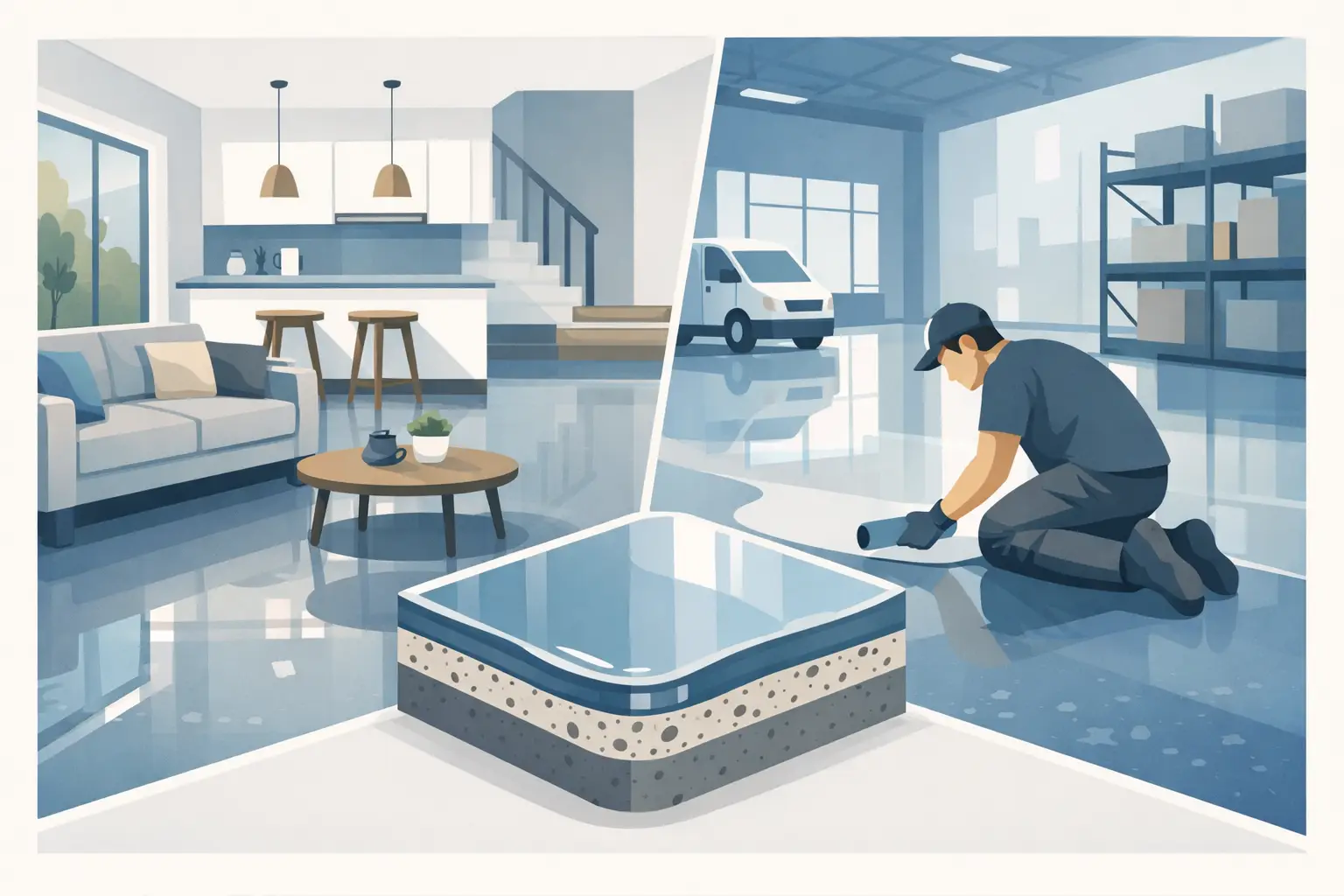
Epoxy flooring is a resin-based coating applied over prepared concrete. Once cured, it forms a dense, bonded surface that is far easier to clean than bare concrete and far more resistant to many everyday spills, scuffs and impacts.
The finished look can be simple and contemporary, such as a solid grey floor in a garage, or more decorative with coloured flakes and a protective clear topcoat. In commercial settings, epoxy can create a tidy, professional surface that stands up to regular foot traffic, trolleys, equipment and routine cleaning.
Its biggest advantage is that it improves both presentation and protection at the same time. Bare concrete is porous, which means it absorbs moisture, oil and grime. A correctly installed epoxy system closes that surface and gives the room a sharper, more finished feel.
That said, not every epoxy floor is the same. The quality of the resin, the condition of the slab, the profile created during preparation and the chosen topcoat all affect how the floor performs. A cheap coating applied over dusty, damp or weak concrete may look good briefly, then peel or wear unevenly. The visible result is only as good as the work beneath it.
Where Epoxy Flooring Performs Best
Epoxy is particularly effective in garages, workshops, storage areas, laundries, utility rooms and commercial back-of-house spaces. These are areas where a floor needs to cope with practical use without looking neglected.
In a residential garage, it can make cleaning simpler after weekend projects, bike maintenance or muddy shoes. It also lifts the overall impression of the space, which matters when the garage is attached to the home or used as more than a place to park the car.
For businesses, a well-specified epoxy floor can help create a cleaner and more organised workplace. It suits retail stockrooms, commercial kitchens where an appropriate non-slip system is selected, workshops, warehouses, clinics and customer-facing spaces that need a neat modern finish. The right texture and coating build should always be matched to the job. A smooth glossy finish may suit a display area, while a work zone exposed to water or oils may need additional slip resistance.
Epoxy can also work well over concrete patios and certain interior living areas, although the design and exposure need consideration. In bright open spaces, gloss can reflect significant light. Outdoors, direct UV exposure can affect some epoxy products over time, particularly lighter colours, so a UV-stable topcoat or a different resurfacing system may be the better option.
The Preparation Decides the Result
The most reliable epoxy flooring review is not about colour charts or before-and-after photos. It starts with the concrete. Surface preparation is where a professional installation separates itself from a quick coating job.
Concrete must be clean, sound and dry enough for the system being used. Oil contamination, old paint, moisture rising through the slab, loose concrete and hairline cracking all need to be assessed before coating begins. Simply washing the floor is rarely enough.
Mechanical grinding is commonly used to remove weak surface material and create the right profile for adhesion. Cracks and damaged areas are repaired where required, then the floor is thoroughly cleaned before primer and epoxy coats are applied. Depending on the system, decorative flakes may be broadcast into the wet coating before excess flakes are removed and a clear protective coat is added.
This process takes time, but it avoids the problems that frustrate property owners later: bubbling, peeling, patchy gloss and coatings that lift under tyres. In coastal areas around Wollongong, Shellharbour, Kiama and Cronulla, moisture conditions deserve particular attention. A slab that looks dry at the surface can still hold moisture below, and that needs to be considered before a coating system is selected.
The Benefits That Matter Day to Day
The appeal of epoxy is not only visual. A properly prepared and coated floor is easier to maintain than unsealed concrete because dust and spills stay on the surface rather than soaking in. Regular sweeping and a gentle mop are generally enough for most residential spaces.
It also provides a tougher finish for areas that receive regular wear. Tyres, toolboxes, foot traffic and stored equipment can quickly mark plain concrete. Epoxy helps protect the slab while making minor mess easier to deal with.
Colour and flake options allow the floor to fit the property rather than feeling industrial by default. A restrained blend can complement a modern garage or renovated laundry, while a more decorative finish can give a showroom, studio or reception area a point of difference.
There is also a value consideration. A clean, durable floor improves the way a property is presented, particularly in garages, workspaces and commercial premises where worn concrete can make the whole area appear neglected. It is not a substitute for structural concrete repairs, but it is a practical upgrade for a sound slab that needs a better finish.
The Trade-Offs to Consider Before You Commit
Epoxy is durable, not indestructible. Heavy impacts can chip it, sharp metal can scratch it and harsh chemicals can damage some systems if left sitting for extended periods. The solution is not to avoid epoxy, but to specify the coating for the work the floor actually needs to do.
It can also be slippery when wet if a high-gloss, smooth finish is installed without suitable texture. This is especially relevant for entry areas, wet workspaces and commercial environments. Decorative flakes and non-slip additives can improve grip, although more texture can make deep cleaning slightly more involved.
Installation timing is another consideration. Epoxy needs controlled conditions and curing time. The floor cannot be walked or driven on immediately, so the project needs to be planned around access to vehicles, equipment and the area being coated. A reliable contractor will set expectations clearly before work begins, rather than promising a turnaround that compromises the finish.
Finally, epoxy does not solve every concrete problem. If the slab has ongoing movement, major cracking or significant moisture issues, those causes need attention first. Coating over an unresolved problem usually delays the repair rather than preventing it.
What Affects Epoxy Flooring Cost?
The size of the area is only one part of the cost. Condition of the concrete, crack repairs, grinding requirements, moisture treatment, coating thickness, decorative flakes, non-slip finishes and access to the site all influence the final scope.
A straightforward single garage with sound concrete will require a different system from a commercial workshop with old coatings, oil staining and high traffic. This is why an on-site assessment is more useful than an estimate based only on square metres. It allows the contractor to identify preparation work early and recommend a finish that suits the property and budget.
The lowest quote can be tempting, but it is worth asking what surface preparation, primer, coating build and topcoat are included. A cheaper figure can leave out the very steps that give epoxy its lifespan. For a premium result, the focus should be on a complete system rather than a thin top layer.
Care That Keeps the Finish Looking Sharp
Once cured, epoxy flooring is relatively low maintenance. Sweep away grit regularly, as dragged dirt can gradually dull any finished surface. Clean spills promptly, particularly oil, fuel and strong chemicals, and use a soft broom or mop with a mild cleaner rather than abrasive products.
Avoid dragging heavy steel items across the floor where possible. Place protective pads under machinery, shelving and sharp-edged equipment, and use a mat at external doors to reduce sand and grit being tracked inside. These simple habits preserve the finish and keep the floor looking clean for longer.
For homes and businesses that want a floor to work hard without looking purely functional, epoxy is a strong option when it is designed around the site. Pupovac Decorating approaches each project with the same care given to premium painting and resurfacing work: assess the surface properly, prepare it thoroughly and deliver a finish that looks right for the property. The best next step is to inspect the concrete, talk through how the space is used and choose a coating system built for that purpose.


Comments